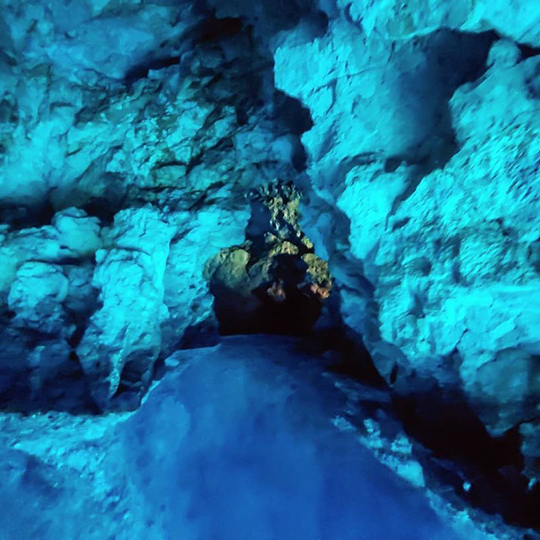
Located on the island of Biševo, just off the coast of Vis island in Croatia, is one of the most amazing and stunning natural wonders in the world, the Blue Cave.
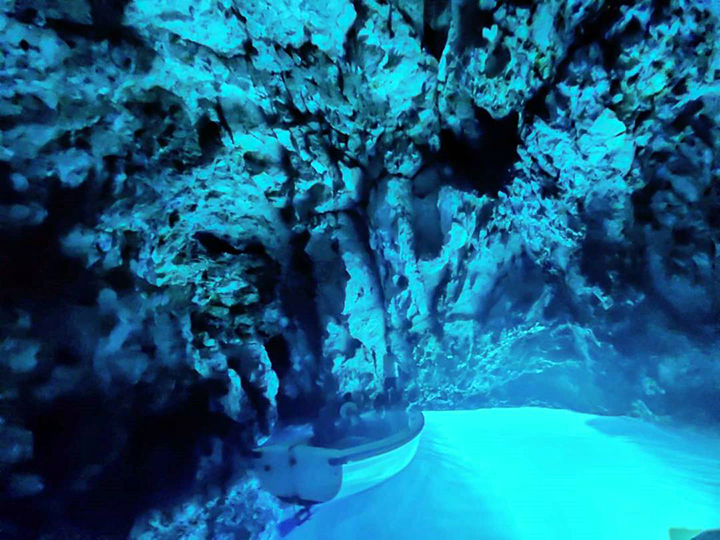
The Blue Cave is famous for the sunlight that filters through the cave underwater and illuminates the entire cave a bright, glowing teal blue.

The sun has to be at the right point to hit the water and reflect off the white sand sea floor in order for this phenomenon to take place. (Between 11 and 2 when the sun is in the correct spot in the sky).

We planned an itinerary for the morning and chartered a small boat to explore the island. Davor, proved to be an amazing and knowledgeable guide.
Quick shout out to Davor at Vis Sea Adventure.
On the top of our list… the Blue Cave and the abandoned WWII military submarine tunnels and the elaborate labyrinth of tunnels and bunkers that run under the surface of the island.


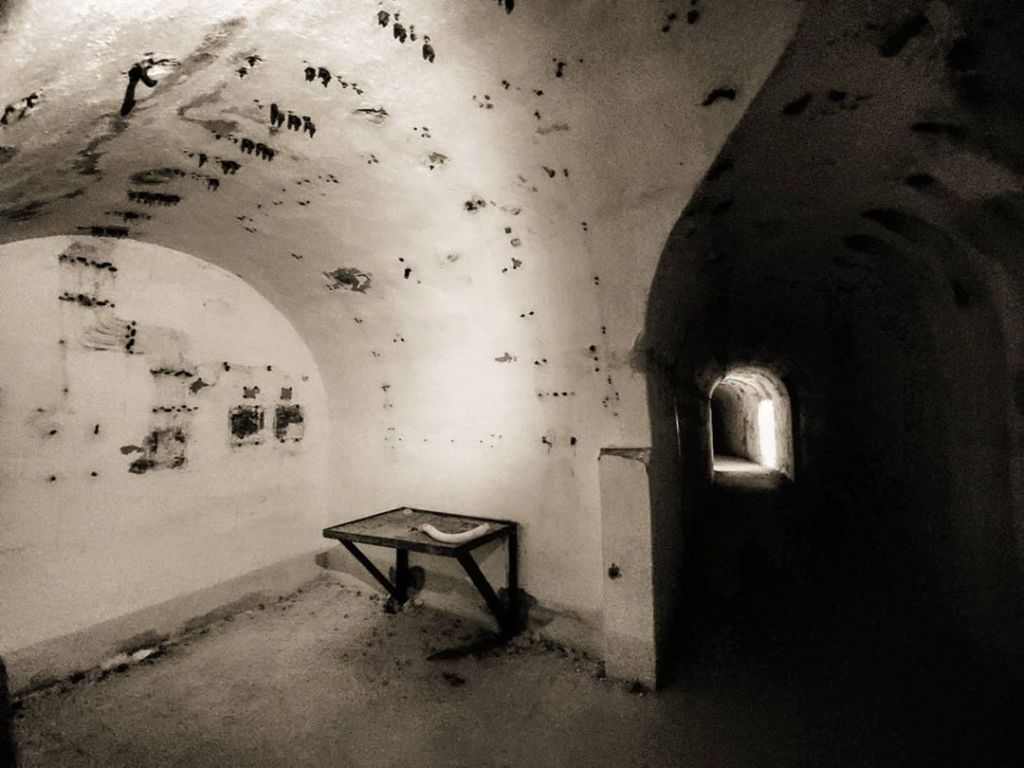
You can read all about these abandoned tunnels under the island, as well as some other very well preserved military history on the island that you can easily explore on your own, in a separate post here.
When you reach the island of Biševo you must buy a ticket and go into the cave with a tour group. Although swimming is strictly forbidden I am told by a Croatian friend that if you have your own boat you can dive underneath on your own at certain times during the day.
The island is an amazing spot for scuba diving and snorkeling.
The Blue Cave (or Modra špilja) is located at the Balun Cove on the eastern side of the island of Vis. Though Croatian fisherman have known of the Blue Cave since ancient times, it wasn’t until 1884 that a (relatively) easy entrance was blasted out with dynamite.
Before this small hole in the side of the rock was opened, the only way to enter was to dive underneath the cave walls.

When I say small, I mean it is INSANELY small…as we approached the young man rowing the boat calmly told us to “duck“.
We thought this was a joke because the entrance is so small you can’t see it until you’re well on your way through.
The entrance was so tiny that our little row boat would only fit through if we all put our heads between our knees.

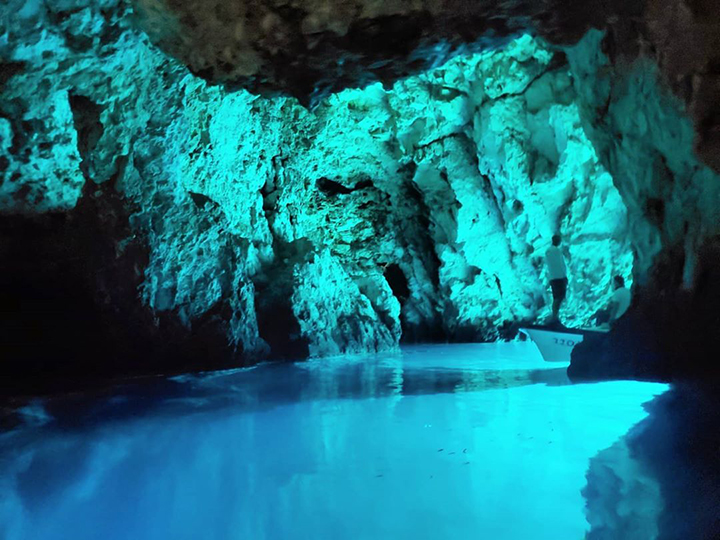
Once inside you’ll be struck speechless by the beautiful, glowing blue light as the entire cave is illuminated from the sunlight’s reflection off the limestone and white sand sea floor below.
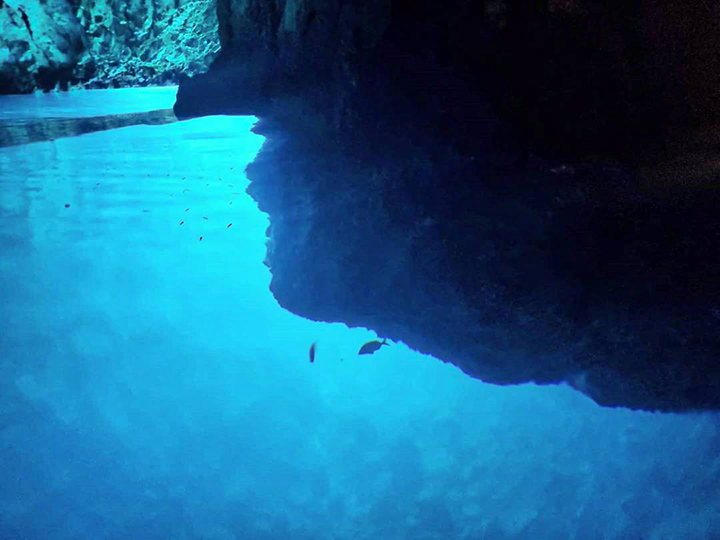
The water is so crystal clear you can see all the way to the sea floor. Although it is about 15 meters below it looks much more shallow. You can only gauge it’s actual scale when you follow the cave walls down to the floor.
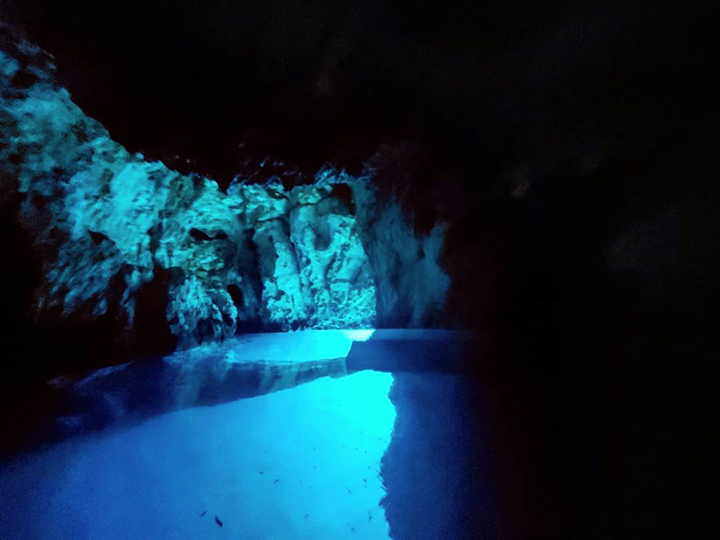


You can see every detail on the cave walls as they plunge far beneath you.
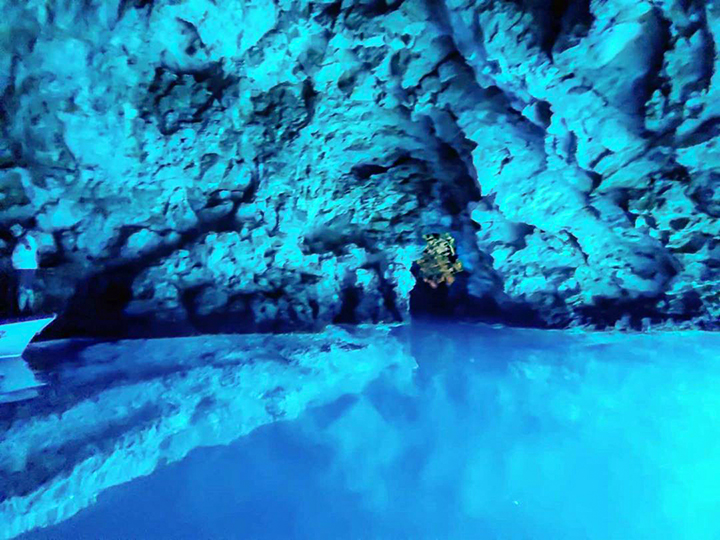
Pictured above is the entrance/exit from the cave. By looking at the man to the far left in the small boat you can put in perspective just how small the hole in the rock really is.

Once the tour into the Blue Cave was over we got back to our own boat where Davor showed us around the rest of the island.
The beauty of the natural formation of the rocky limestone coast is stunning and the water is so clear you can see every detail of the reefs below you.
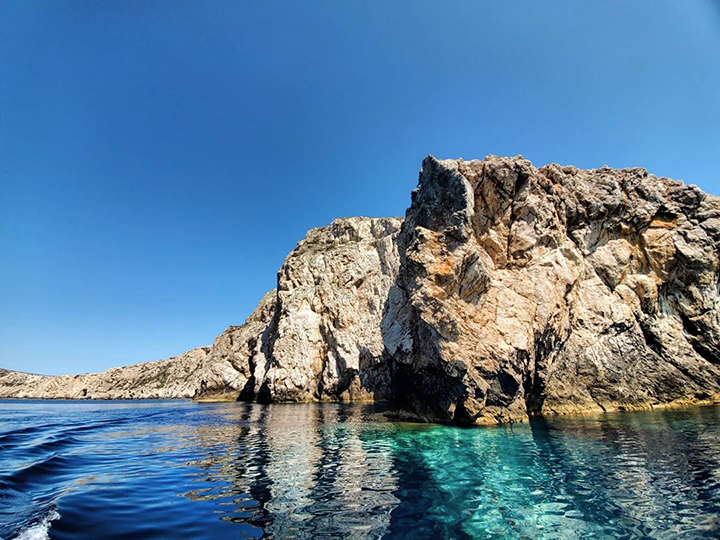
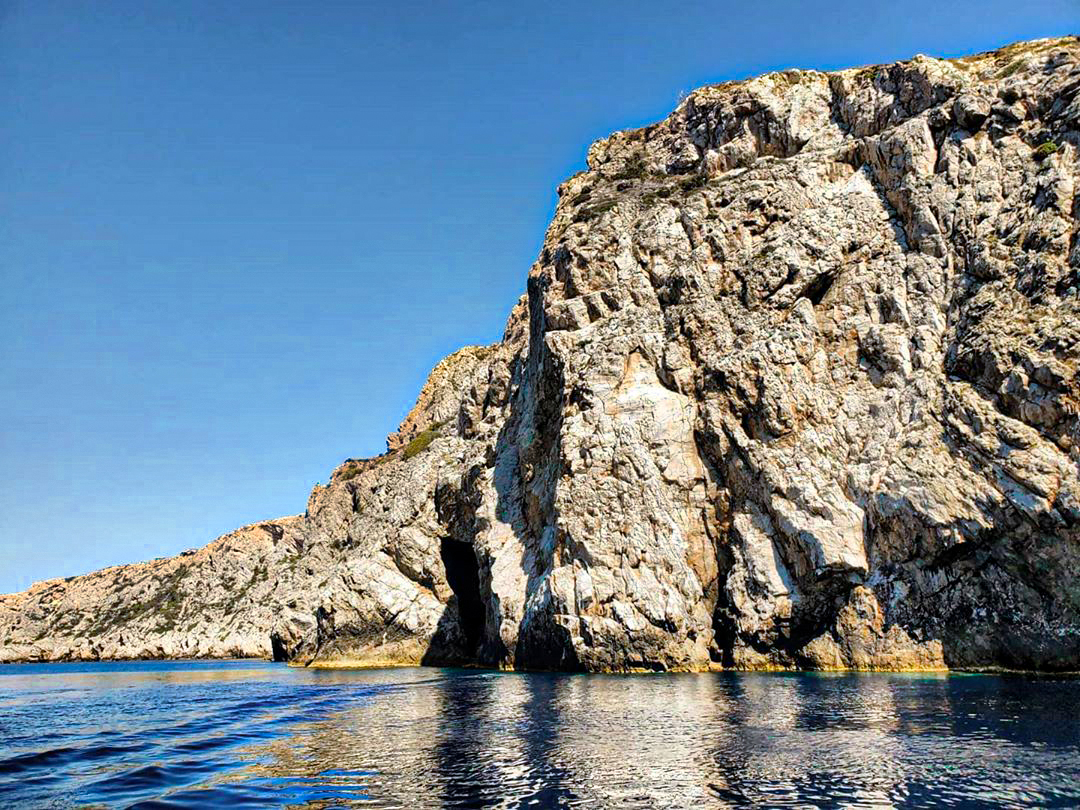
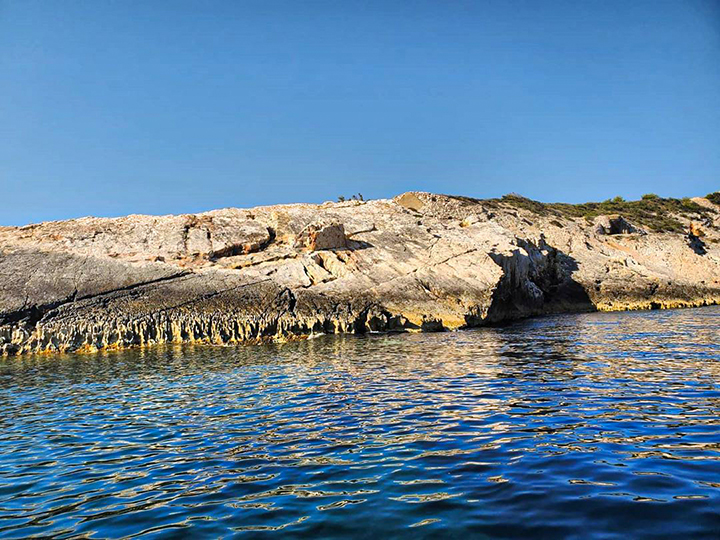

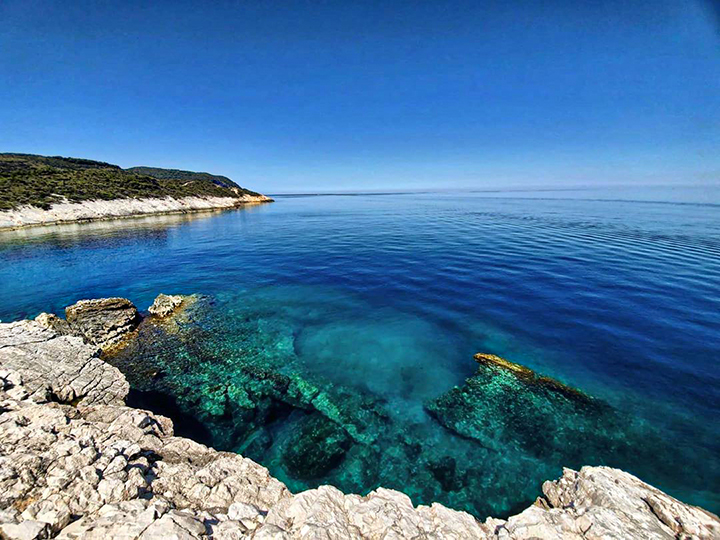
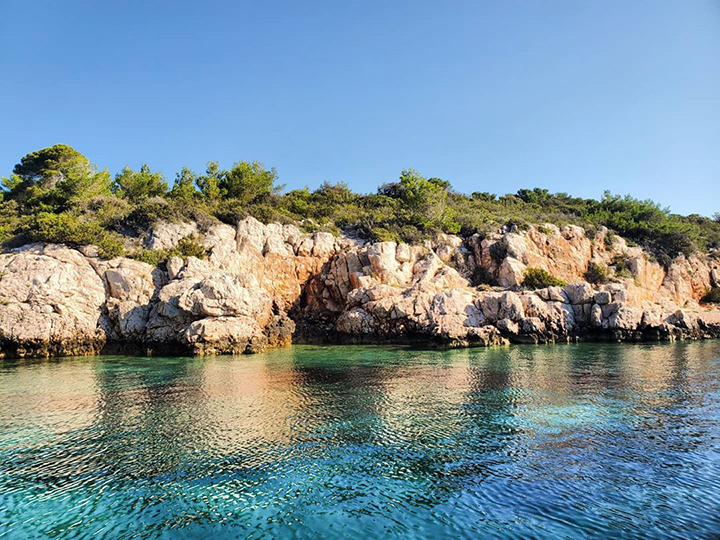
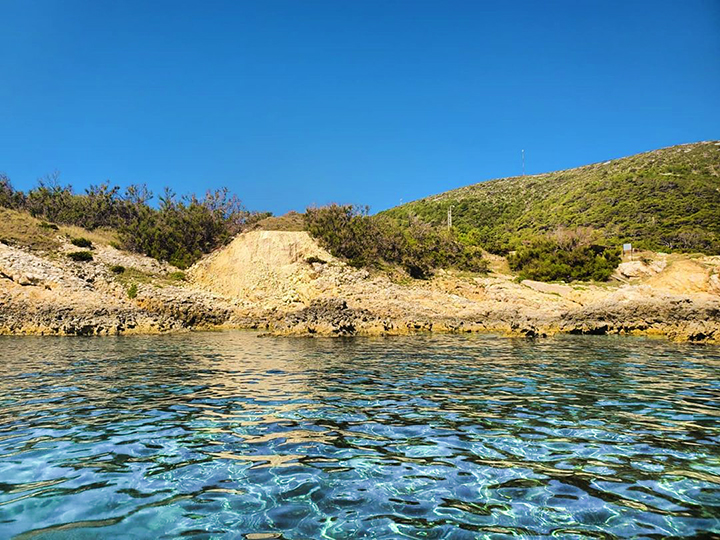
The Blue Cave is certainly not the only cave underneath the island of Vis….
The Monk Seal’s Cave

Located on the southern tip of Biševo island, just a short ride from the Blue Cave, is the Monk Seal’s Cave or (Medvedina Spilja).
The cave got its name after the Mediterranean Monk Seals who used to reside in these waters until the middle of the last century.
Biševo Island, which is primarily made out of limestone, is filled with number of caves which were once used by Mediterranean Monk Seals as an ideal place for protection, rest and, most importantly, as a spawning ground.
Monk Seals today are one of the most endangered mammals on the planet Earth. This is mainly because the monk seals used to tear fishermen’s nets feasting on all the fish they found inside. This forced fishermen to start culling the seals and their pups to protect the fishing industry on the island, which hosts age-old fishing towns like Komiza, who with their authentic Falkusa boats, have been fishing these waters for centuries.
Since 1935 the Mediterranean Monk Seal has been an officially protected species. However, despite these protections awards were still being given for each monk seal, so in 1964 the last specimen of the Mediterranean monk seal on the Croatian side of the Adriatic Sea was reportely killed.
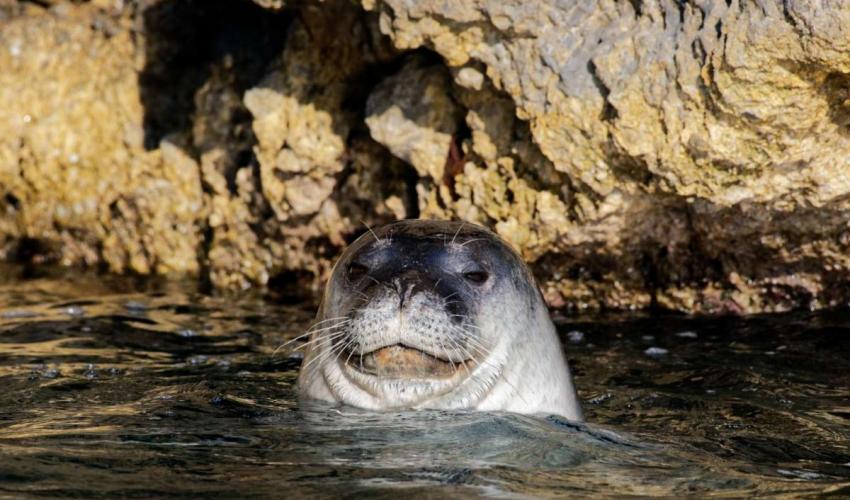
At present day, you cannot find many of these seals around the island and cave they once ruled, although these recent sightings in the area are exciting conservationists.
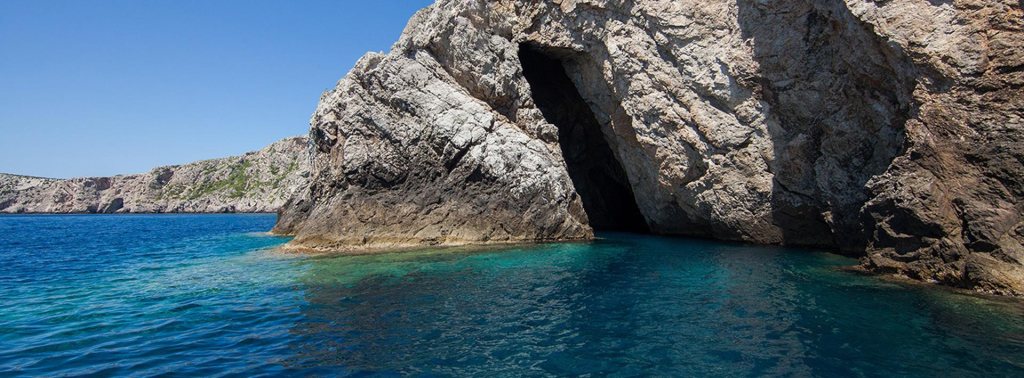
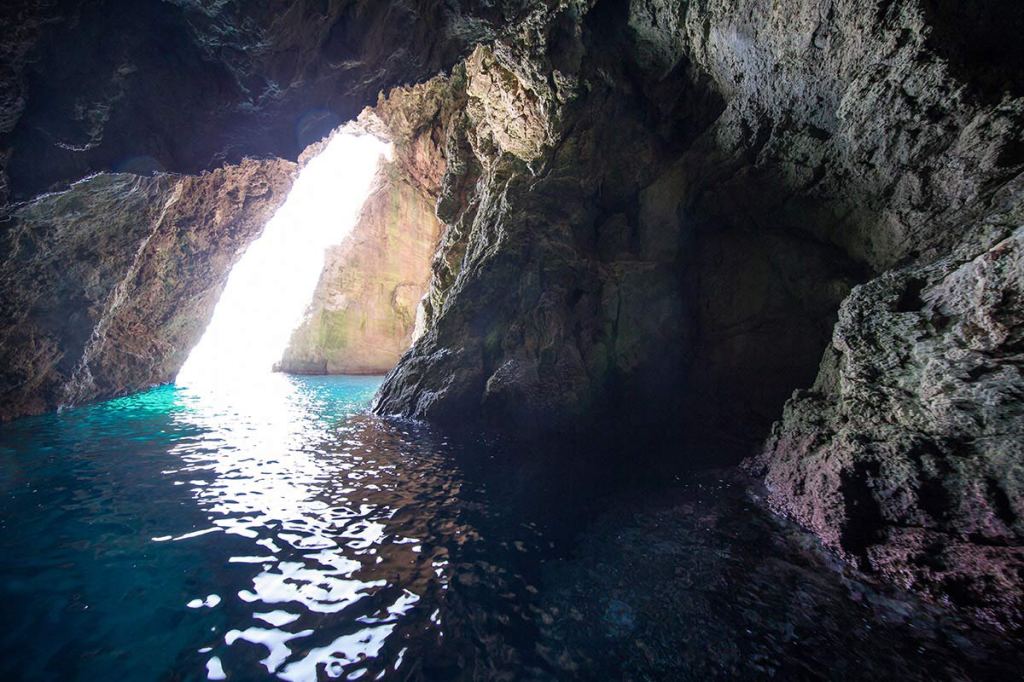
As you enter the tall gate of the cave, enjoy the blue glow illuminating the cave interior as the light penetrates the entrance.
The Monk Seal’s Cave entrance is quite large (17 meters in height – 5 meters in width) and goes deep inside the island (about 160 meters). The sunlight from the entrance can not light the entire cave and as you venture further inside it quickly becomes REALLY DARK.


You can only take your boat so far inside, so if you want to see the entire cave you have got to get out and swim/snorkel the rest of the way with a light.
At the end of the cave you can find a small pebble beach where the seals once rested.
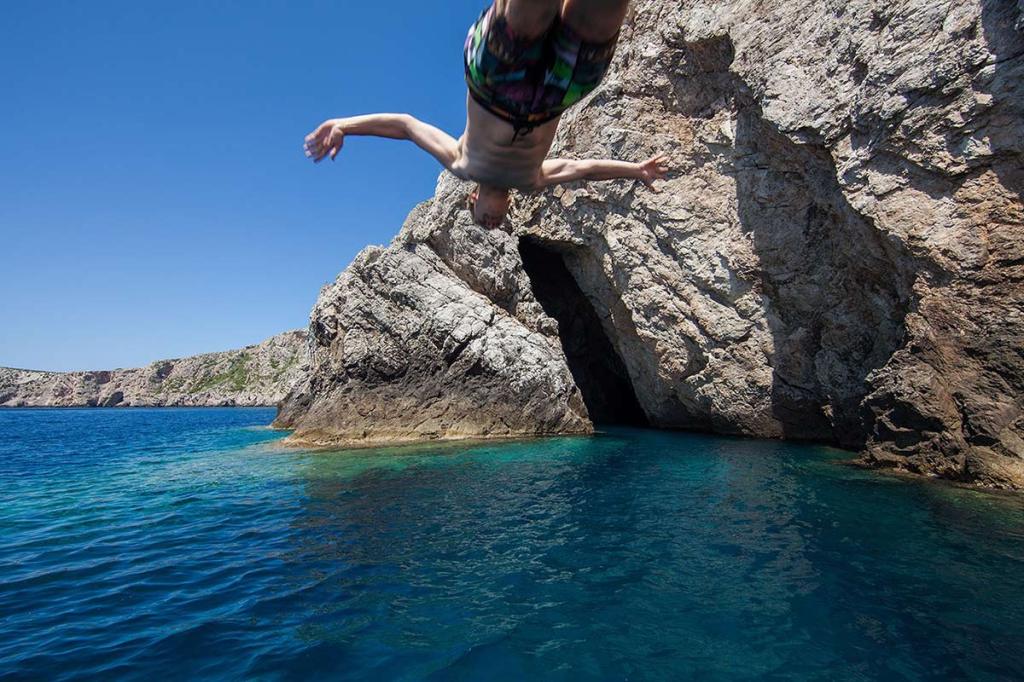
As opposed to Blue Cave, the monk seal cave is not a usual stop of the day tours so you will typically not encounter a lot of people. Swimming and snorkeling is MUCH easier here.
 emily & entropy